

A comparison of traditional and innovative legume products
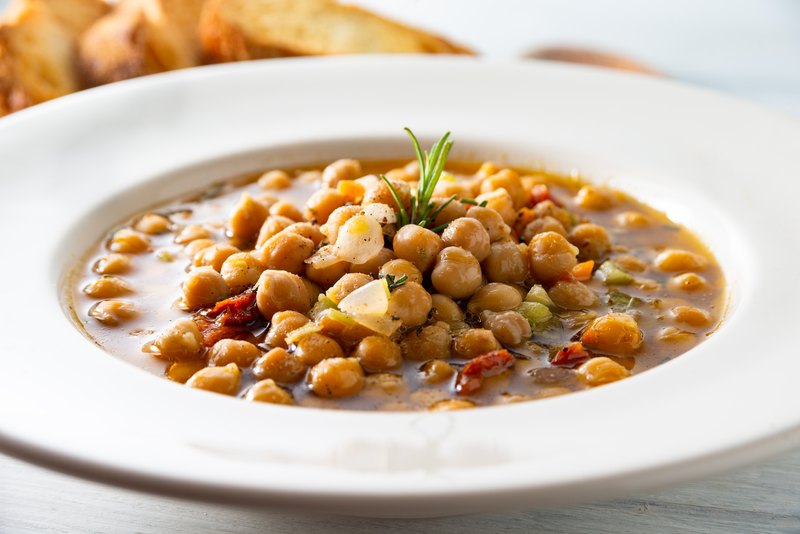
Legumes, including pulses, have the reputation of being a health-promoting food. Increasingly, processed products are also being consumed. As yet, it is unclear how manufacturing processes affect the bioavailability of nutrients. In the EatLegu project, a more profound understanding of the components of legumes and their biological mechanisms of action is being sought by means of chemical analysis, a digestion model, and a human intervention study. One of the core goals is to ascertain whether processed products and those that are only made of certain constituents of legumes have comparably positive effects on health. In the project, both traditional dishes made from legumes, such as lentils with spaetzle, as well as innovative products like pasta made from peas or lentils are being investigated.
Legumes are versatile local staples: they are high in protein, provide the body with essential nutrients and dietary fibre, and are a plant-based alternative to meat. Because of their health-promoting impact, efforts have been underway for years to integrate more legumes in people’s diet. Despite this, consumption in Germany still falls below the amount recommended by the German Nutrition Society.
Unlike the raw products, processed products made of peas, lentils and other legumes do not need to be soaked or cooked for a long time. They can therefore be included in the diet more easily. As industrial processing can influence the ingredients, however, such products may differ from natural grain legumes in their composition and possibly also in their nutritional physiology.
EatLegu collaborative project
EatLegu (Nutritional Aspects of Traditional and Innovative Legume Products) is a collaborative project between MRI and TU Berlin. It is part of the Federal Ministry of Agriculture, Food and Regional Identity’s (BMLEH) Protein Crop Strategy. TU Berlin’s activities focus on chemical analysis. At MRI, an in-vitro study (digestion model) and a human intervention study are being conducted.
The aim of EatLegu is to explore the biological mechanisms underlying the health benefits of legumes and identify the ingredients involved in these benefits. The project also explores how traditionally prepared legumes and innovative legume products affect digestion and metabolism.
From chemical analysis to intervention trial
The first step is to determine the existing palette of legume-based dishes and products on the food market. For the subsequent investigations, three groups will be formed:
- Traditionally prepared legumes (e.g., lentil stew)
- Legume products made from flour (e.g., pasta, snacks)
- Legume products made from high-protein fractions (e.g., aqueous extracts in plant-based beverages; protein concentrates or isolates in meat substitutes)
A selection of foods will then be studied by means of chemical analysis, an in-vitro digestion model and a human intervention study. These three types of complementary analyses will identify valuable ingredients and determine the impact of processing on the nutritional quality of legumes.
Chemical analysis
At TU Berlin, the dishes and products selected are chemically analysed. With regard to the three groups investigated, it can be assumed that traditionally prepared legumes and legume products made of flour exhibit the widest range of ingredients deriving from the raw materials.
Digestion model
At MRI, the selected legume-based dishes and products are investigated in an in-vitro study. A digestion model (Tiny-TIM) is used to examine the digestion of proteins and carbohydrates and to determine the bioavailability of nutrients. The model simulates the complex process in the gastrointestinal tract: from the release of nutrients and their conversion into an absorbable form through to nutrient absorption.
Human intervention trial
A human intervention trial is also being conducted at MRI (TILL trial: traditionally prepared and innovative products made of legumes) which investigates the nutritional impact of a regular consumption of legumes on humans. It aims to test whether consuming ready-made, legume-based products, such as lentil pasta, spreads and snacks, yield health benefits comparable to those associated with eating traditionally prepared legume dishes (e.g., lentil stew or chickpea curry).

Data for consumption recommendations
The results of EatLegu are intended to be used as a basis for consumption recommendations. Moreover, a set of criteria will be derived to help food producers, amongst others, develop high-quality legume products.
Project funding
Funded by the Federal Ministry of Agriculture, Food and Regional Identity in accordance with a resolution of the German Bundestag under the BMLEH’s Protein Crop Strategy.
