

Application of bacteriophages against biofilms on surfaces in milk‑producing plants
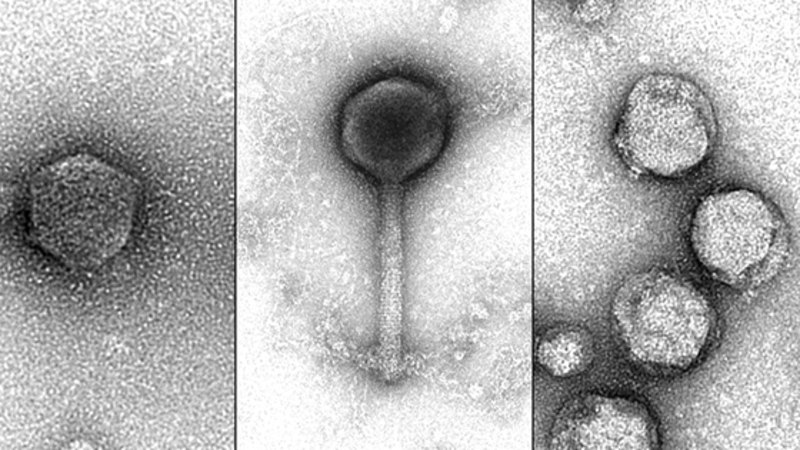
Pseudomonads are among the most widespread psychrophilic spoilage organisms. They are especially prevalent in aerobically stored, water‑rich, pH‑neutral foods such as raw milk. Pasteurisation or ultra‑high‑temperature treatment effectively inactivates these bacteria, but the heat‑stable enzymes they produce cause loss of flavour, colour and shelf‑life after only a short storage period. If surfaces in milk‑producing plants are not sufficiently covered by automatic cleaning – for example in the milking system – microbial biofilms can develop. Such biofilms facilitate the entry of Pseudomonads into the milk.
In a project coordinated by the Research Association of the German Food Industry (FEI), researchers at the MRI investigated how bacteriophages can be used to eliminate Pseudomonads from industrially relevant surfaces. Bacteriophages (short: phages) are viruses that exclusively infect and kill bacteria, without affecting other microorganisms or the food itself.
Biofilm reduction through the combination of cleaning procedures
Within the research project, 29 Pseudomonas‑specific phages were isolated and genomically characterised. Laboratory experiments showed that a phage cocktail markedly inhibits the formation of new biofilms – especially when applied preventively. Already established biofilms, however, can only be reduced to a limited extent. The efficacy depends strongly on the type of surface: inactivation of Pseudomonads is considerably more effective on metal than on rubber.
When phages are combined with conventional acid and alkali cleaners, a synergistic effect was observed. The combined cleaning procedures allowed a significantly greater reduction of pre‑existing biofilms in the experiments than the individual methods alone.
Development of practicable hygiene strategies
The findings provide a solid basis for developing practical, combined hygiene strategies in milk‑producing plants. Limitations of a purely phage‑based approach must also be taken into account, for example the risk of resistance development. Overall, the results demonstrate that phages have great potential for controlling Pseudomonas biofilms, particularly when used preventively as well as in combination with chemical cleaning agents.
Funding
The IGF project 01IF22677N of the Research Association of the German Food Industry (FEI) was supported within the programme for promoting the Industrial Collective Research (IGF) of the German Federal Ministry for Economic Affairs and Energy on the basis of a decision by the German Bundestag.