

Biomarkers of food intake for health research

In epidemiological studies, dietary intake (the amount of a consumed food) is typically assessed by means of questionnaires, interviews or food diaries. These assessment methods may be affected by various subjective errors, such as when participants inaccurately estimate their portion sizes. This is where so-called biomarkers of food intake (BFI) come into play. These substances, e. g. found in urine, indicate the consumption of specific foods and are intended to enable more objective dietary assessment in future. To advance research in this field, a number of BFI candidates were evaluated for their validity and applicability within the European Joint Research project FoodPhyt, which involved the MRI. Within this project, the focus was on biomarkers of food intake for plant-based foods.
Biomarkers of food intake for plant foods
Biomarkers of food intake for plant foods are usually phytochemicals or their metabolites that are excreted in the urine after the consumption of this particular food. Ideal biomarkers are specific to the food under consideration, i. e. they should not be present in any other food. Only in this way the excreted quantity of the biomarker can be used to draw direct conclusions about the quantity of the food consumed.
The FoodPhyt project
FoodPhyt (Food phytochemicals matter for cardiometabolic health) was a project under the European Joint Programming Initiative "A healthy diet for a healthy life" (JPI HDHL). The aim was the systematic validation of biomarkers of food intake for selected plant-based foods. Additionally, a quantitative multimarker analysis of biological samples was intended to enable an overall assessment of the consumption of plant-based foods (metabolite profiling). The MRI played a leading role in biomarker validation and the development of a method for multimarker analysis. A further task of the MRI was to assess the applicability of the developed method in human studies.
The collaborative FoodPhyt project aimed to raise the awareness and understanding of the enormous and so far, neglected potential of phytochemicals in foods to support the global fight against obesity and related cardiometabolic diseases. For this, the current knowledge regarding the mechanisms of action and metabolism of phytochemicals was compiled and published in the PhytoHub database to help create evidence-based dietary recommendations.
Validation of biomarkers of food intake for a plant-based diet
Through the FoodPhyt project, suitable BFI were compiled from various sources: In addition to analysing literature data, metabolomics data of a human study and a food screening at the MRI were evaluated. Furthermore, known BFI of the FoodBALL project were included. Moreover, new BFI candidates for plant-based foods were identified through a systematic literature search. In total, there were 157 BFI candidates for 13 vegetables, 118 BFI candidates for nine fruits, and 276 BFI candidates for eight additional plant-based foods.
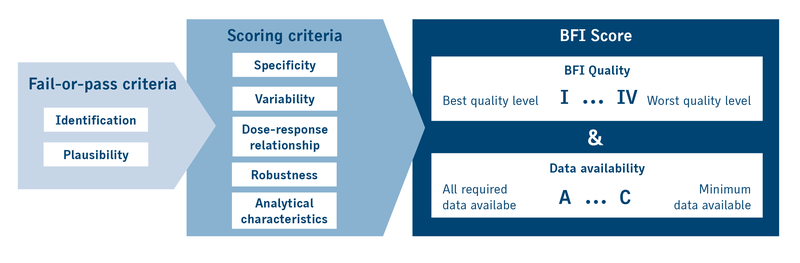
The newly developed scoring system for validation of biomarkers of food intake is based on the validation criteria developed in the FoodBAll project: plausibility, analytical performance, dose-response, time-response, robustness, reliability, and reproducibility. Additionally, correct identification and the variability of BFI were incorporated as validation criteria. The bipartite score includes the marker quality and validity, as well as data availability. The scoring system aims to simplify the practical application of biomarkers of food intake.
Developement of a method for multimarker analysis
For 85 selected biomarkers of food intake, an analytical multimarker method was developed for quantitative determination in biological samples. This approach allows for a comprehensive evaluation of the dietary intake of plant-based foods. It employs a high-performance liquid chromatography coupled to tandem mass spectrometry (HPLC-MS/MS). The selection of BFIs was based on their specificity for the respective plant foods, their commercial availability, and findings from a human study conducted at the MRI.

In accordance with the guidelines of the European Medicines Agency (EMA), the multimarker method was successfully validated. With the newly developed multimarker method and scoring system for the validation of BFI, the FoodPhyt project has established crucial foundations for the systematic validation of food consumption markers and their application in epidemiological studies.
![[Translate to English:] Logo EU](/fileadmin/_processed_/8/b/csm_EU_logo_3f3187aea5.jpg)
This project was financially supported by the European Union under the Horizon 2020 research and innovation program, based on Grant Agreement No. 696300.
Further information
Further information about the project can be found on the website of the Joint Programming Initiative “A healthy diet for a healthy life".
Scientific publication
Hassenberg C, Soukup ST, Armeni M, Bub A, Cannas JV, Fuentes D, Savolainen O, Seifert S, Landberg R, Kulling SE, Mack CI: Method development and validation for quantitative determination of urinary biomarkers of food intake for multiple foods. J Chromatogr B Analyt Technol Biomed Life Sci 1268, 124793, 2025, doi: 10.1016/j.jchromb.2025.124793